|
Getting your Trinity Audio player ready...
|
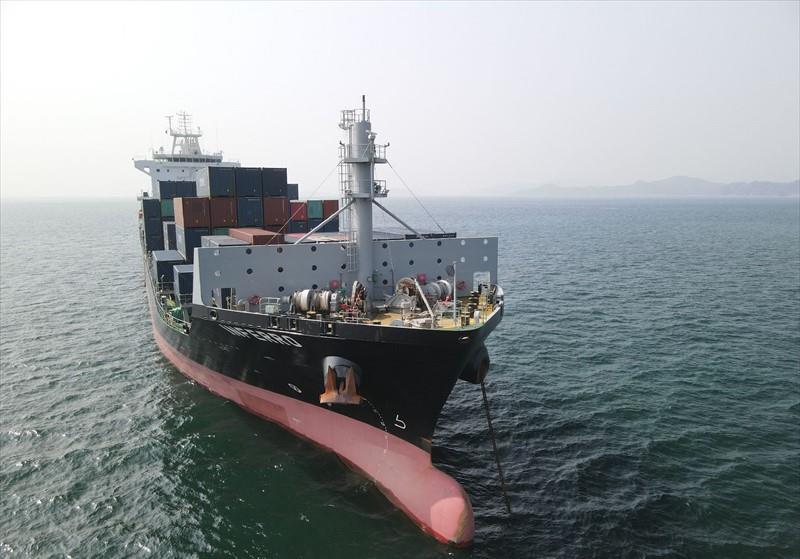
Residents and fishermen in Newfoundland are increasingly alarmed by the worsening condition of the grounded containership MSC Baltic III, which has remained stuck on a rocky ledge in Lark Harbour since February 15. With the full force of North Atlantic winter weather now battering the region, powerful waves are relentlessly striking the vessel, causing progressive structural damage and heightening fears that the ship could eventually break apart.
Local stakeholders warn that such a scenario could send debris and remaining pollutants into the nearby coastal waters, posing a serious threat to the surrounding environment and fishing grounds.
“This wreck has become a ticking environmental time bomb,” a spokeswoman for the Fish, Food and Allied Workers union told CBC. “The lack of urgency in dealing with it has placed our fisheries, coastlines, and communities at significant risk.”
Last week, a major storm system swept across Newfoundland’s western coast, delivering some of the harshest conditions the wreck has faced since its grounding. Salvage efforts were temporarily suspended as the severe weather caused substantial motion in both the bow and stern, along with a “noticeable change” in the condition of the ship’s port side. Photographs from the scene show the hull buckling upward at midships, with a sharp crease forming beneath the painted “S” of “MSC” on the vessel’s port side.
When conditions improved on Wednesday, a Canadian Coast Guard team boarded the vessel to reassess its state. Their inspection revealed structural damage below deck, including compromised framing and bulkheads near a water ballast tank. The contracted salvor, T&T Salvage, is now carrying out an extensive survey of the vessel, which includes evaluating the salvage equipment previously stored on board—some of which has been damaged or swept away during storms.
Meanwhile, some residents have voiced frustration over the slow progress of the salvage operation, questioning whether more could have been accomplished sooner if an access road had been constructed earlier. Work on the road did not begin until early May, more than three months after the grounding, limiting the movement of heavy equipment and personnel to the site.
According to Coast Guard response officer Bruce English, a full wreck removal operation is unlikely before spring, when safer weather and sea conditions are expected to return.
Most of the ship’s fuel oil has already been removed, and by late October, crews were flushing out the remaining traces from the bunker tanks whenever weather permitted. However, with winter storms intensifying and the vessel’s condition deteriorating, local communities fear the environmental risks are increasing by the day.