|
Getting your Trinity Audio player ready...
|
In a development that has reignited global attention on one of aviation’s greatest mysteries, maritime exploration company Ocean Infinity has officially launched a new deep-sea search for Malaysia Airlines Flight MH370, the Boeing 777 that vanished over the Indian Ocean in March 2014 with 239 people on board. More than a decade after the aircraft disappeared, its fate remains unresolved, haunting the families of victims and confounding investigators worldwide. Ocean Infinity now believes that advances in autonomous search technology, combined with refined analytical models, may finally reveal the aircraft’s final resting place—and with it, long-sought answers.
A renewed effort in a remote ocean expanse
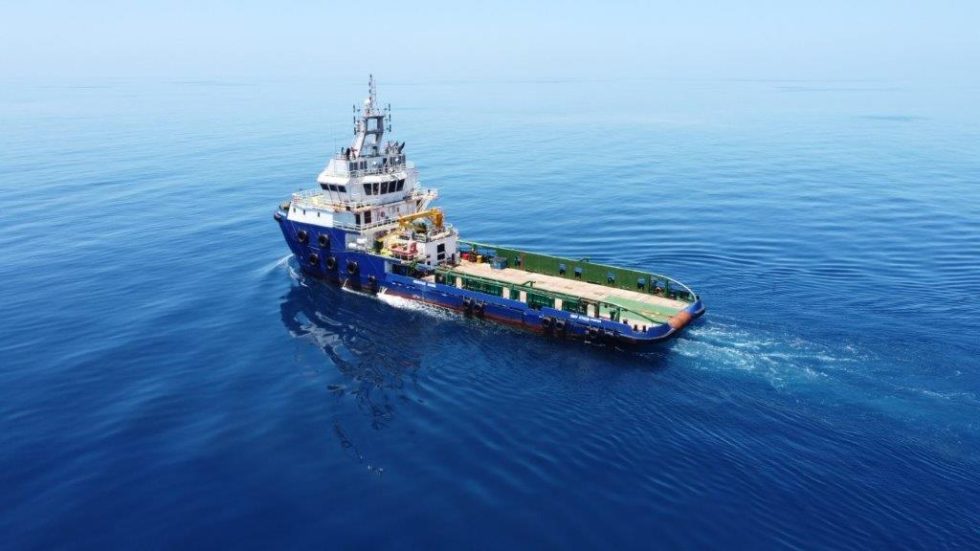
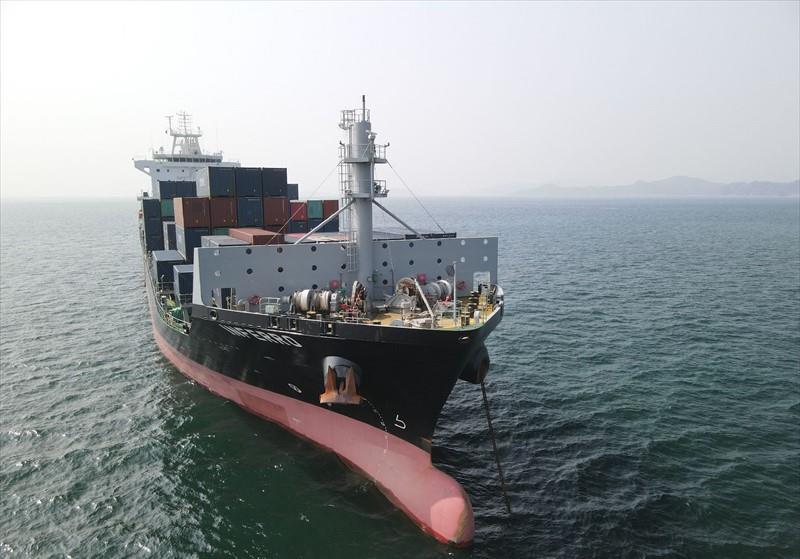
According to automatic identification system (AIS) data provided by maritime intelligence firm Pole Star Global, Ocean Infinity’s vessel Armada 86 05 is currently on station approximately 1,100 nautical miles west of Perth, Australia. The ship is conducting a systematic search, moving in tight north-to-south legs of roughly 15 to 20 nautical miles each, a pattern designed to maximize seabed coverage while maintaining precision in one of the world’s most challenging marine environments.
The water depth in the search zone varies dramatically, ranging from around 1,100 meters to more than 4,000 meters. High-resolution seabed charts indicate a complex and rugged underwater landscape, characterized by vast abyssal plains interspersed with deep valleys and scattered seamounts. Such terrain complicates detection efforts, as wreckage could be obscured by geological features or buried under sediment after years on the ocean floor.

“Ocean Infinity Initiates Latest Deep-Sea Hunt for Missing Flight MH370”
A time-limited, high-stakes mission
Ocean Infinity’s current mission is scheduled to last up to 55 days and could cover an area of approximately 25,000 square kilometers, according to aviation investigator Richard Godfrey, who has closely followed the MH370 case and spoke to The Guardian. The search is being conducted under a service agreement with the Malaysian government, structured in a way that underscores the company’s confidence in its capabilities.
Under the terms of the deal, Ocean Infinity will receive no payment if the wreckage is not found. However, if the company succeeds, it stands to earn up to $70 million, along with the associated media and advertising rights that would accompany the resolution of one of the most high-profile missing aircraft cases in history. The agreement reflects both the enormous difficulty of the task and the potential value—financial, historical, and humanitarian—of solving the mystery.
A company with a track record in deep-sea discovery
Ocean Infinity is no stranger to high-risk, high-reward search missions. The Texas-based company has built a reputation for locating wrecks and objects in some of the most inaccessible parts of the world’s oceans. Among its notable successes is the discovery of the Endurance, the ship used by famed Antarctic explorer Sir Ernest Shackleton, which was found in remarkably preserved condition beneath Antarctic waters.
The company has also located the wreck of the Stellar Daisy, a massive ore carrier that sank in the South Atlantic in 2017, and the Argentine Navy submarine ARA San Juan, which disappeared in 2017 with 44 crew members aboard. These achievements have cemented Ocean Infinity’s standing as a leader in autonomous subsea exploration, capable of operating where conventional search methods struggle or fail.
A company with a track record in deep-sea discovery
The renewed search comes after multiple unsuccessful attempts to locate MH370, including Ocean Infinity’s own effort in 2018. That earlier mission surveyed approximately 80,000 square kilometers of seabed but did not yield definitive results. Government-led searches prior to that were even more extensive, collectively covering more than 120,000 square kilometers across the southern Indian Ocean.
Despite the scale of these efforts, the main wreckage of MH370 has never been found. Only scattered debris—confirmed or suspected to be from the aircraft—has washed up on distant shores, including islands in the western Indian Ocean and parts of the African coastline. These fragments provided proof that the aircraft crashed into the ocean but offered limited insight into the precise location of the impact.
Investigators and analysts argue that the current search differs fundamentally from previous attempts, not only in terms of technology but also in the refinement of search models. Over the past several years, independent researchers have continued to analyze satellite data, drift patterns of recovered debris, and aircraft performance models, narrowing down potential search zones.

Cutting-edge technology beneath the waves
At the heart of Ocean Infinity’s confidence is its fleet of advanced autonomous underwater vehicles (AUVs), many of which are supplied by Norwegian technology firm Kongsberg. These AUVs are capable of operating at extreme depths for extended periods, collecting high-resolution sonar imagery of the seabed.
Unlike earlier generations of search equipment, the AUVs used in the current mission can simultaneously deploy multiple sensing technologies. High-frequency side-scan sonar provides detailed images of the ocean floor, while magnetometers are used to detect anomalies caused by large metal objects—such as an aircraft fuselage or engines—hidden beneath sediment or obscured by terrain. In addition, laser scanning systems can be employed at closer range to produce highly detailed, three-dimensional images of potential targets.
This multi-layered approach significantly improves the odds of identifying wreckage, even in areas previously searched. Advances in data processing and artificial intelligence also allow analysts to review vast quantities of sonar data more efficiently, reducing the risk that critical clues will be overlooked.
The enduring mystery of MH370
Malaysia Airlines Flight MH370 departed Kuala Lumpur for Beijing on March 8, 2014. Less than an hour into the flight, the aircraft vanished from civilian radar screens. Military radar data later indicated that the plane made a sharp turn back across the Malay Peninsula before heading south over the Indian Ocean.
After the aircraft moved beyond the reach of radar coverage, the only electronic traces it left behind were a series of automated hourly “handshakes” with an Inmarsat communications satellite. These pings continued for roughly seven hours after takeoff, ending around the time the aircraft would have exhausted its fuel supply.
Crucially, the satellite data provided only limited information. Each ping confirmed that the aircraft was still airborne at a given time, but it did not reveal an exact location. Instead, the data defined a series of arcs—possible positions along which the aircraft could have been flying at the moment of each handshake. The final arc, corresponding to the last transmission, stretches across a vast expanse of the southern Indian Ocean.
The long interval between pings and the one-dimensional nature of the data have made pinpointing the crash site extraordinarily difficult. Even with sophisticated modeling, the priority search zone spans tens of thousands of square kilometers, much of it in remote waters known for extreme weather and rough seas.
A hostile environment
The southern Indian Ocean is among the most unforgiving maritime regions on Earth. Powerful storms, towering waves, and strong currents are common, particularly in the latitudes known as the “Roaring Forties” and “Furious Fifties.” These conditions not only complicate surface operations but also influence underwater currents that can shift debris over time.
For search teams, the environment poses logistical and technical challenges. Rough seas can limit the deployment and recovery of underwater vehicles, while strong currents at depth may affect navigation accuracy. Ocean Infinity’s autonomous systems are designed to mitigate some of these risks, allowing AUVs to operate independently of surface conditions to a greater extent than traditional towed equipment.
A new operational model
The vessels supporting the search represent a departure from conventional survey ships. Ocean Infinity’s Armada 86 class vessels are smaller, more fuel-efficient, and designed with a high degree of automation. They require significantly fewer crew members on board, reducing operational costs and improving safety.
Each vessel is equipped with dual moonpools—openings in the hull that allow underwater vehicles to be launched and recovered in relatively protected conditions—as well as over-the-stern handling systems. This flexibility enables the deployment of multiple AUVs and remotely operated vehicles (ROVs) during a single mission.
Perhaps most notably, many of the submersible operations can be controlled remotely from shore-based command centers. This hybrid approach combines the efficiency of autonomous systems with the expertise of human operators, who can analyze data in near real time and adjust search parameters as needed.
Hope, closure, and unanswered questions
For the families of those aboard MH370, each new search brings a mix of hope and apprehension. The discovery of the wreckage would not undo their loss, but it could provide a measure of closure and, potentially, answers to lingering questions about what happened in the aircraft’s final hours.
From an investigative standpoint, locating the main wreckage could yield critical evidence. Flight data recorders and cockpit voice recorders—if recovered and readable—might clarify whether the aircraft’s disappearance was caused by mechanical failure, human intervention, or a combination of factors. Even in the absence of intact recorders, the distribution and condition of the wreckage could offer valuable insights.
The stakes of discovery
Beyond the personal and investigative implications, the outcome of the search carries broader significance for aviation safety and maritime exploration. Solving the MH370 mystery could inform future protocols for aircraft tracking, emergency response, and international cooperation in crisis situations.
For Ocean Infinity, success would further solidify its reputation as a pioneer in deep-sea exploration and autonomous maritime operations. Failure, while financially costly under the terms of the agreement, would still contribute valuable data and experience to the evolving field of ocean surveying.

A race against time
As the Armada 86 05 continues its methodical sweep of the seabed, each day brings the possibility of discovery—or the sobering reminder of how vast and unforgiving the ocean can be. The 55-day window underscores the urgency of the mission, balancing operational constraints against the sheer scale of the task.
More than ten years after MH370 vanished, the world is watching once again. Whether this latest effort will finally uncover the truth remains uncertain. What is clear, however, is that advances in technology and determination have brought humanity closer than ever to solving one of the greatest mysteries of the modern age.