|
Getting your Trinity Audio player ready...
|
After more than a year of disruption caused by escalating security threats in the Red Sea, global shipping lines are cautiously reassessing the possibility of restoring container services through one of the world’s most vital maritime corridors: the Suez Canal and the Bab el Mandeb Strait. While recent transits by major carriers suggest a tentative return, the broader picture remains clouded by unresolved geopolitical tensions, shifting military footprints, and renewed threats from Yemen’s Houthi movement.
The reopening of the Suez–Red Sea route would mark a critical turning point for global trade, which has been forced to absorb longer transit times, higher costs, and increased emissions as vessels rerouted around the Cape of Good Hope. Yet despite isolated successes, the maritime industry remains deeply divided between commercial necessity and security caution.
CMA CGM Takes the Lead
Among global carriers, France-based CMA CGM has emerged as the most proactive in testing the feasibility of renewed Red Sea transits. During the height of the Houthi threat, the company distinguished itself by maintaining a limited number of sailings through the area, often under direct naval protection.
That cautious persistence has now evolved into a more structured return. Beginning this month, CMA CGM reinstated two regular container line services through the Suez Canal, marking the most significant commercial resumption since attacks peaked in late 2024.
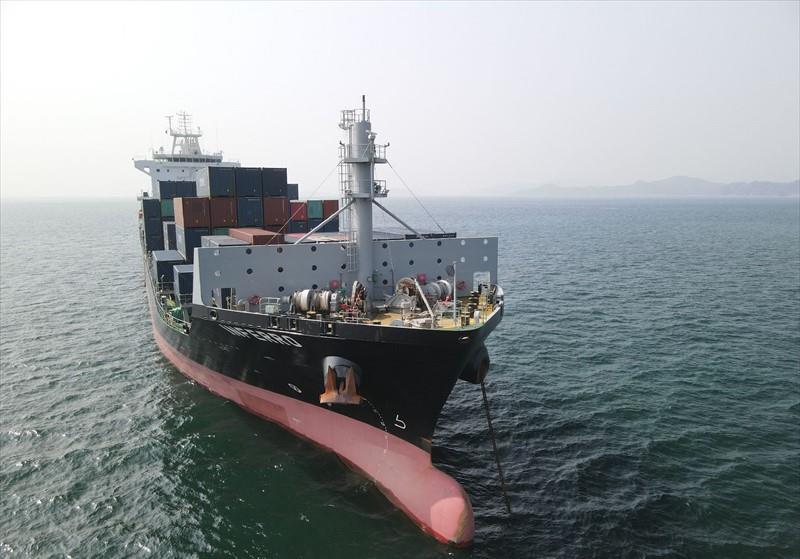
The carrier’s confidence was underscored by the successful passages of two of its vessels: the French-flagged CMA CGM Jacques Saade, one of the world’s largest LNG-powered container ships, and the Marshall Islands–flagged CMA CGM Adonis. Both vessels transited the Red Sea after Christmas without incident, reinforcing the company’s belief that limited, carefully managed operations are again viable.
However, industry observers note that CMA CGM’s approach reflects a calculated risk rather than a declaration of normalcy. The company continues to rely on real-time intelligence assessments, coordination with naval forces, and selective routing decisions.

Suez Canal Traffic Edges Back as Houthis Issue Fresh Threats
Maersk Signals a Measured Reopening
Danish shipping giant Maersk, which had earlier suspended nearly all Red Sea transits, has also begun exploring a gradual return. In December, the Singapore-flagged Maersk Sebarok quietly transited the corridor, followed on January 12 by the U.S.-flagged Maersk Denver, which sailed north through the Bab el Mandeb Strait into the Red Sea.
These transits paved the way for a more formal announcement. On January 15, Maersk confirmed that it would restore its first regular service through the Suez–Red Sea corridor, specifically on a route linking the United States and India. The company emphasized that the decision would be continuously reviewed and adjusted based on evolving security conditions.
In its statement, Maersk acknowledged the ongoing volatility in the region, stressing that vessel safety and crew protection remain paramount. The company made clear that a full-scale return of its Red Sea network is not imminent, and that rerouting via the Cape of Good Hope remains an option should threats escalate again.
Suez Canal Traffic Still Far Below Normal
Despite these high-profile test cases, overall traffic through the Suez Canal remains significantly depressed. According to available data, canal transits during the fourth quarter of 2025 were 19% lower than in 2023 and 45% lower than in 2024.
While part of this decline has been masked by an increase in product tanker movements, container traffic—the backbone of globalized trade—has yet to recover meaningfully. Many carriers remain unwilling to commit high-value container vessels to a corridor where risks, though reduced, have not been eliminated.
The last confirmed Houthi attack on a commercial vessel occurred on September 29, when the Dutch-flagged general cargo ship MV Minervagracht was struck. Yet for insurers, shipowners, and charterers, the absence of recent attacks has not translated into confidence. War risk premiums remain elevated, and underwriting terms continue to reflect the potential for sudden escalation.

Renewed Houthi Threats Rekindle Uncertainty
Any optimism surrounding a gradual reopening was tempered on January 15, when Houthi leader Abdel Malek al-Houthi delivered a televised speech on Lebanon’s Al Mayadeen channel, issuing fresh warnings that sent ripples through the maritime and security communities.
Al-Houthi claimed that reconnaissance operations were underway in preparation for attacks on what he described as “Israeli and Zionist fixed positions” in Somaliland, which he characterized as a direct threat to Houthi oversight of the Red Sea and Bab el Mandeb Strait.
While the statement did not explicitly reference commercial shipping, the Houthis’ history of broad and often ambiguous targeting definitions has raised serious concerns. Past attacks have shown that vessels or installations loosely associated with Israel, the United States, or their allies may be deemed legitimate targets.
As a result, maritime security analysts widely assume that U.S.- and Emirati-operated sites, as well as facilities linked indirectly to Western or regional allies, could fall within the scope of Houthi operations—regardless of their precise function or location.
The Shadow War in Somaliland
The reference to Somaliland added a new and troubling dimension to the crisis. Though unconfirmed, rumors have circulated for years about Israeli intelligence or surveillance installations in the region. Such sites, if they exist, would likely be small, discreet, and technologically focused—possibly consisting of radar, intercept, or signals intelligence equipment positioned on elevated terrain.
These installations would not require large troop deployments and could be operated remotely, transmitting data via satellite links to analysis centers elsewhere. Their strategic value would lie in monitoring maritime traffic and potential threats along the Red Sea and Gulf of Aden.
The issue gained added sensitivity following Somaliland’s recent recognition by Israel and subsequent signals from Hargeisa that it intends to maintain and expand military cooperation with Tel Aviv. This development has drawn the attention—and ire—of the Houthis, who view any Israeli presence near critical maritime chokepoints as a direct challenge.
The Emirati Footprint: Expansion and Retrenchment
Complicating matters further is the evolving military posture of the United Arab Emirates across the Red Sea and Gulf of Aden region. For years, the UAE maintained a network of bases, airfields, and logistical hubs stretching from Yemen to Eritrea and Somalia.
However, recent months have seen a noticeable contraction of this footprint. The Yemeni Internationally Recognized Government (IRG), backed more heavily by Saudi Arabia, appears to have consolidated control over the coastline south of Hodeida. In parallel, the Emiratis have withdrawn from newly constructed airfields at Mocha and Dhubab.
Heavy-lift cargo flights observed in recent weeks suggest that the UAE has also vacated positions on the Red Sea islands of Perim and Zuqar, further signaling a strategic recalibration. That said, the UAE continues to maintain a presence in Assab, on Eritrea’s Red Sea coast, a base that has long been central to its regional operations.
Beyond the Red Sea itself, the UAE remains deeply embedded along the southern shore of the Gulf of Aden, retaining military facilities in Berbera (Somaliland) and Bosaso (Puntland). These deployments persist despite strained relations with Somalia’s federal government and rely on agreements with local autonomous authorities.
Socotra: A Strategic Puzzle
The island of Socotra, located at the junction of the Arabian Sea and the Gulf of Aden, represents another strategic wildcard. While the UAE appears to have reduced its civilian and commercial footprint on the island—closing operations run by companies such as Prime Fishing, ADNOC, and Eastern Triangle—it has not entirely withdrawn.
Hospitals have shut down, fuel sales ceased, and electricity generation halted. Local militia members previously sponsored by the UAE have reportedly been paid off, signaling an end to direct Emirati patronage.
At the same time, social media footage has shown Saudi forces boarding vessels in Mukalla, suggesting Riyadh is moving to consolidate the IRG’s authority over Socotra. If intelligence-gathering installations exist within the Socotra archipelago—and many analysts believe they likely do—the IRG may be inclined to support their continued operation, particularly if they contribute to monitoring Houthi activity along the Maritime Security Transit Corridor (MSTC).
The Houthis’ Shifting Strategic Calculus
While the Houthis remain a formidable threat, their strategic environment has also changed. The movement has suffered significant losses following targeted strikes against its leadership cadre last summer, operations widely attributed to Western and allied forces.
Though the group continues to publicly align itself with Iran’s religious and political leadership—now one of Tehran’s last reliable regional allies—its confidence has reportedly been shaken. Internal attrition, combined with growing international military pressure, has forced the Houthis to weigh the costs of renewed escalation.
This caution is likely reinforced by the arrival of the USS Abraham Lincoln carrier strike group, whose presence underscores Washington’s readiness to respond forcefully to any renewed campaign against maritime targets.

An Enduring Threat to Global Shipping
For shipping lines, the dilemma is stark. The economic logic of returning to the Suez Canal is undeniable: shorter voyages, lower fuel costs, faster delivery times, and reduced environmental impact. Yet the security risks—while diminished—remain unpredictable and potentially catastrophic.
As a result, the industry appears set on a path of incremental re-engagement, led by a handful of carriers willing to test the waters under tightly controlled conditions. A full normalization of Red Sea shipping, however, will likely depend on sustained security improvements and clearer deterrence against future attacks.
Until then, the Red Sea will remain a corridor in limbo—too important to abandon, yet too dangerous to fully embrace.