|
Getting your Trinity Audio player ready...
|
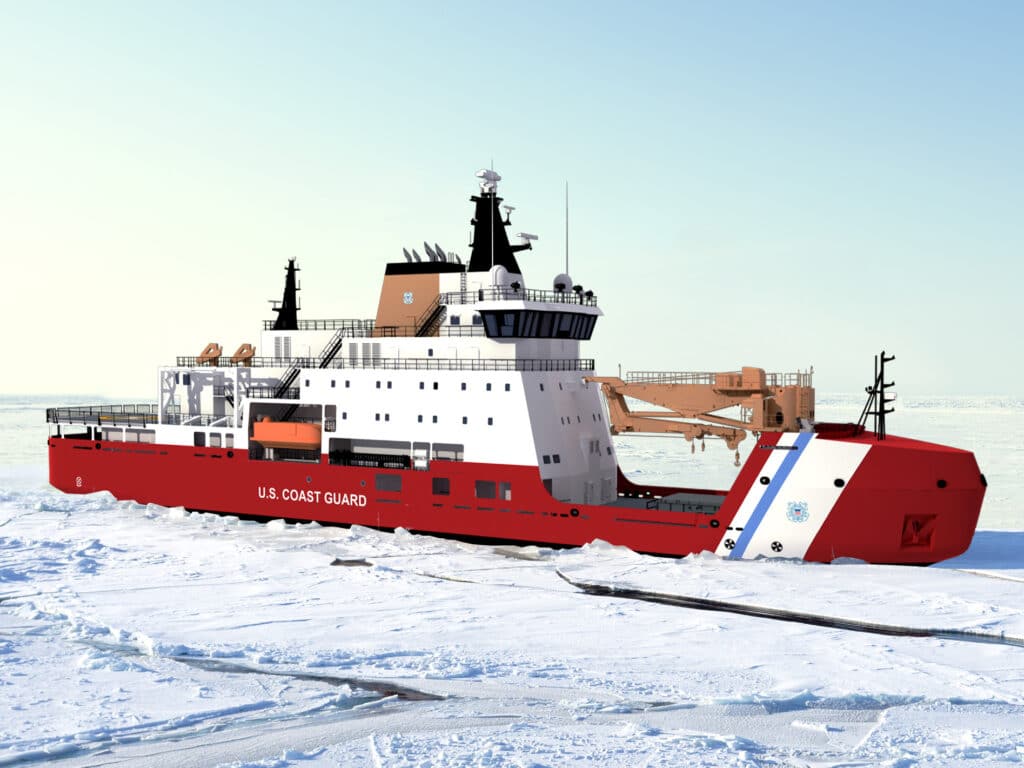
In a landmark move that underscores growing geopolitical interest in the Arctic, the United States and Finland have entered into a historic Memorandum of Understanding (MoU) to co-design and construct a new fleet of six Arctic Security Cutters (ASCs) for the U.S. Coast Guard. The agreement, signed at the White House by President Donald Trump and Finnish President Alexander Stubb, marks a major strategic and industrial partnership aimed at strengthening America’s presence and capabilities in the rapidly evolving Arctic region.
The Bollinger Shipyards-led consortium—comprising Rauma Marine Constructions (RMC) of Finland, Seaspan Shipyards of Canada, and Aker Arctic Technology Inc.—will spearhead the program’s design and construction efforts. The team’s selection follows the invocation of special presidential authorities under 14 U.S.C. 1151(b) and 10 U.S.C. 8679(b), allowing foreign shipbuilding participation on the grounds of national security necessity.
A New Era in U.S.-Finnish Maritime Collaboration
The White House emphasized that the agreement directs the U.S. Coast Guard to develop a phased plan for the ASC program that promotes the onshoring of advanced Arctic shipbuilding expertise. Under the arrangement, the first four Arctic Security Cutters will be constructed in Finland, leveraging the Nordic nation’s unparalleled ice-class shipbuilding experience. Subsequent units—potentially up to seven more—will be built in American shipyards as the domestic industrial base transitions to full capability.
“This agreement represents not just a shipbuilding partnership, but a strategic alignment of industrial strength and Arctic expertise between two allied nations,” the White House statement read. “It ensures rapid capability development while fostering domestic industrial growth and self-reliance.”
The Bollinger Team: A Global Consortium for Polar Power
At the heart of the program is a mature, production-ready Multi-Purpose Icebreaker (MPI) design, developed jointly by Seaspan and Aker Arctic. This design, already tested and validated for extreme polar operations, allows the ASC program to move directly into the production phase—an uncommon advantage in defense shipbuilding.
“Today’s award is a testament to President Trump’s leadership and his historic investment in America’s maritime industrial base,” said Ben Bordelon, President and CEO of Bollinger Shipyards. “We’re honored by the trust placed in us and our partners. The Arctic Security Cutter will allow the U.S. to project strength, enforce sovereignty, and reassert American leadership in the High North.”
The six-vessel program will begin with parallel construction in Finland and the United States, with Rauma Marine Constructions and Bollinger Shipyards each fabricating three vessels simultaneously. The plan accelerates delivery timelines while laying the foundation for a fully domestic production line in later stages. The first trio of ASCs is expected to be delivered within 36 months of contract award, an ambitious timeline made possible by shared industrial capacity.
Finnish Precision Meets American Power
For Finland’s Rauma Marine Constructions, the agreement is both an honor and a strategic opportunity. “The United States Coast Guard is placing its trust in our proven ice-class shipbuilding capabilities,” said Mika Nieminen, CEO of RMC. “We’re ready to deliver on an accelerated timeline in close cooperation with Bollinger and our allied partners. Together, we’ll provide the world’s most capable Arctic security vessels.”
The Finnish shipbuilder, known for constructing some of the world’s most advanced icebreaking vessels, brings decades of polar engineering experience to the partnership. This collaboration is expected to transfer vital knowledge to the U.S. shipbuilding workforce, paving the way for future domestic Arctic ship production.
Political and Economic Impact
The MoU also drew strong praise from U.S. lawmakers. House Majority Leader Steve Scalise (R-La.) called it a “historic win” for Louisiana and for the nation’s shipbuilding sector. “Bollinger Shipyards is the only American shipbuilder with the capability, capacity, and expertise to start construction on day one,” Scalise said. “This agreement solidifies Southeast Louisiana’s leadership in building ships that will project American power and defend our interests in the Arctic.”
Seaspan and Aker Arctic: Engineering the Future of Polar Defense
Both Seaspan and Aker Arctic play crucial roles in the technological backbone of the ASC program. Seaspan’s CEO John McCarthy highlighted the international synergy behind the effort:
“Seaspan is extremely proud to work hand in hand with our American and Finnish partners to deliver a state-of-the-art design ready for the most demanding ice conditions. This contract elevates Seaspan’s marine engineering and design capabilities to a global level and strengthens North America’s capacity to build and export Arctic-class vessels.”
Meanwhile, Mika Hovilainen, CEO of Aker Arctic, underscored the collaboration’s symbolic importance:
“The ASC program represents a milestone in allied Arctic cooperation. We’re honored to bring our expertise in icebreaker technology to help deliver world-class capabilities to the U.S. Coast Guard.”
The ICE Pact: A Model for Allied Industrial Collaboration
The program is being developed under the ICE Pact, a trilateral framework for Arctic collaboration between the United States, Canada, and Finland. The initiative is designed to foster shared industrial projects that enhance collective Arctic readiness among NATO allies. By constructing the first three vessels in parallel at RMC and Bollinger, the partnership not only accelerates early capability delivery but also establishes a solid industrial base for future U.S.-only construction and sustainment.
Under this model, Bollinger will ultimately take full leadership for all U.S.-based production and lifecycle maintenance, ensuring long-term economic benefits remain within the domestic shipbuilding industry.
Unprecedented Capability for a New Arctic Era
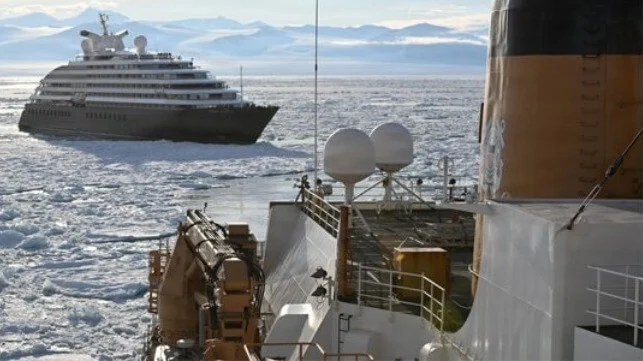
The Arctic Security Cutter represents a generational leap in capability for the U.S. Coast Guard. Designed to break through four feet of ice, travel up to 12,000 nautical miles, and remain at sea for more than 60 days, the ASC will support an array of missions including defense, maritime sovereignty enforcement, scientific research, environmental monitoring, and search-and-rescue operations.
Its multi-mission architecture shares design commonality with vessels of the Canadian Coast Guard, ensuring seamless interoperability across North American Arctic fleets. Once fully operational, this shared capability will constitute the largest and most advanced icebreaking force in the world, giving the U.S. and its allies unmatched access and presence in the polar regions.
Canada’s Role: Expanding the Allied Ice Fleet
Complementing the U.S.-Finnish effort, Canada’s Davie Shipyards will construct a separate class of Arctic vessels based on its fourth-generation Multi-Purpose Polar Support Ship (MPPS) design. These ships will expand North America’s collective icebreaking capacity, further aligning the defense and logistical networks of the continent’s Arctic powers.
Asserting Leadership in the Polar Frontier
The signing of this Memorandum of Understanding represents far more than a procurement contract—it is a declaration of intent. It signals that the United States and its allies are prepared to invest heavily in the tools and partnerships required to safeguard sovereignty, sustain freedom of navigation, and advance scientific exploration in the Arctic, a region of mounting global significance.
With Bollinger at the helm, Rauma providing technical excellence, Seaspan driving innovation, and Aker Arctic delivering proven ice-class design, the ASC program stands as a model of strategic cooperation, industrial resilience, and allied unity.
When the first Arctic Security Cutter takes to the water, it will not only carry the flag of the United States—it will symbolize the combined ingenuity and determination of three allied nations committed to preserving stability and freedom in the world’s coldest frontier.