|
Getting your Trinity Audio player ready...
|
The Chinese Embassy in Athens has sharply criticized the United States and its newly appointed ambassador to Greece, Kimberly Guilfoyle, after she described Chinese-owned stakes in the Port of Piraeus as “unfortunate” and suggested the facility could even be put up for sale. Her comments have ignited a fresh diplomatic row, adding fuel to ongoing tensions between Washington and Beijing over global port investments.
Guilfoyle—an attorney, former prosecutor, and former Fox News host—assumed her first diplomatic post in September and arrived in Athens earlier this month. During a television appearance on November 14, she underscored the importance of expanding American infrastructure investments in Greece, arguing that the U.S. could “balance against the Chinese influence” in strategic sectors. She went further by stating that “perhaps Piraeus could be for sale,” a remark that drew immediate backlash from Beijing.
In a strongly worded statement, a spokesperson for the Chinese Embassy denounced her comments as “erroneous,” “malicious,” and reflective of a “Cold War mentality.” The embassy accused the U.S. of meddling in Greece’s internal affairs and attempting to leverage Piraeus—and by extension Greece—for its own geopolitical aims. Beijing stressed that its investments in Piraeus were initiated at a time when Greece was struggling through a crippling debt crisis, highlighting that China was the sole bidder in 2009 when the concession was first offered.
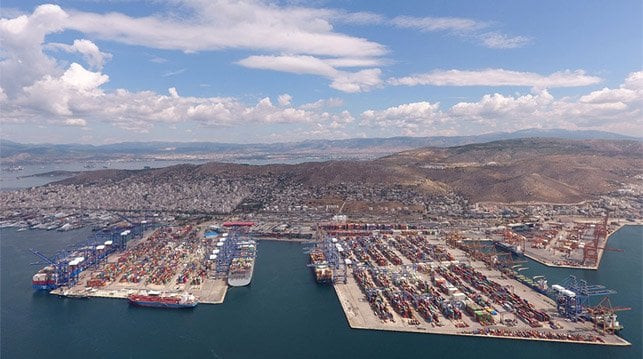
COSCO, China’s state-owned shipping giant, holds a controlling stake in the Piraeus Container Terminal company. The firm secured a 35-year concession in 2009 to operate Piers II and III, later expanding its shareholding to 51 percent in 2016 and 67 percent in 2021. Since COSCO’s entry, the port has seen rapid growth, becoming one of the Mediterranean’s busiest cargo hubs.
The escalating dispute has also prompted a response from the Greek government. During a press briefing on November 18, a spokesperson noted that Prime Minister Kyriakos Mitsotakis acknowledges COSCO’s role in the port’s development. They reaffirmed that Greece “respects the agreements that have been concluded in the past,” signaling no imminent shift in the concession’s status.
Despite the controversy, Guilfoyle appeared to soften her stance, acknowledging that the U.S. has other avenues for expanding its presence in the Greek maritime and logistics sector. One key focus is the ongoing redevelopment of the Elefsina port. American-backed investments have fueled ONEX’s efforts to modernize the Elefsina Shipyard and revitalize the Neorion Shipyard on the island of Syros. In 2023, Washington supported a $125 million loan to ONEX to advance the modernization project, while Greece is preparing legislation that may allow ONEX to pursue a new concession to operate a terminal positioned to compete directly with COSCO’s operations at Piraeus.
The episode underscores Greece’s increasingly delicate position as both Washington and Beijing maneuver for influence in the eastern Mediterranean—an arena where economic interests, strategic ambitions, and global rivalries continue to collide.