|
Getting your Trinity Audio player ready...
|
In a dramatic escalation of maritime enforcement tied to U.S. sanctions on Venezuela’s oil industry, American military and law-enforcement forces have seized their sixth sanctioned oil tanker in as many weeks — underscoring Washington’s determination to assert control over the embattled nation’s crude production and shipments.
In the early hours of Thursday morning, a U.S. Coast Guard tactical team, supported by U.S. Marines and sailors, executed a pre-dawn boarding of the Motor Tanker Veronica in the Caribbean Sea. The operation, coordinated between the Department of Defense, the Department of Homeland Security, the State Department, and the Department of Justice, involved Marine and naval personnel fast-roping from helicopters onto the ship’s deck after staging from the aircraft carrier USS Gerald R. Ford (CVN-78). U.S. commanders later described the seizure as “without incident,” noting that no resistance was encountered and no injuries were reported.
Officials say the action aimed to enforce what the Trump administration has characterized as a maritime quarantine of sanctioned vessels in the Caribbean — a cornerstone of an increasingly aggressive campaign against so-called “shadow fleet” tanker operations that have historically masked crude movements from Venezuela and other sanctioned sources.
Veronica: A Shadow Fleet Stalwart
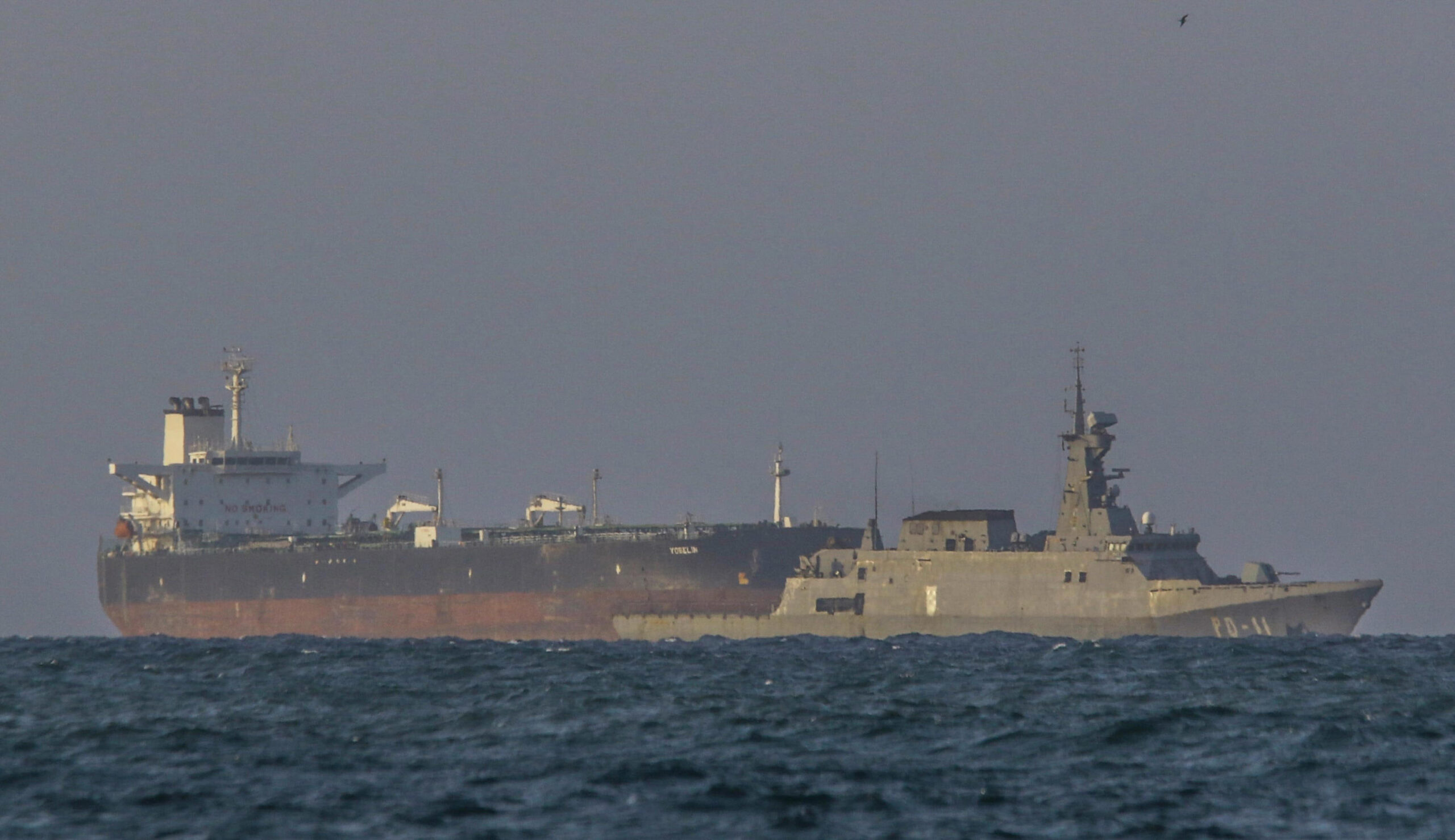
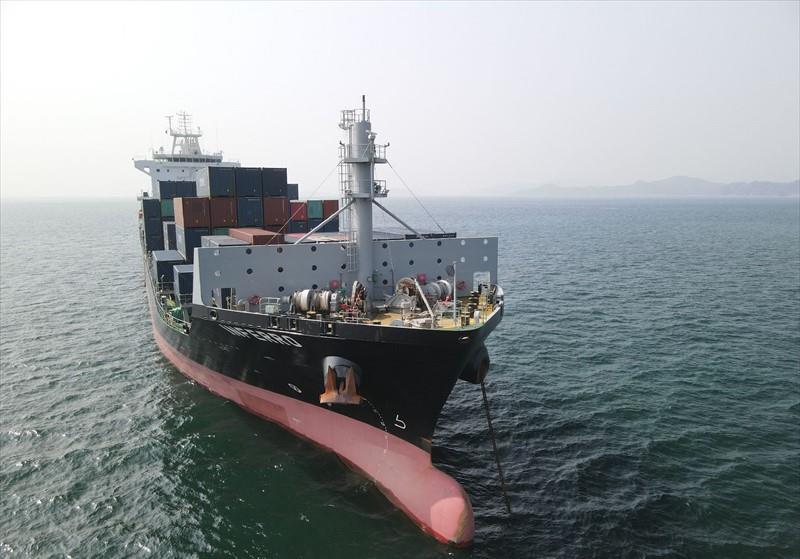
The vessel at the center of the latest operation is no ordinary oil carrier. At 115,500 deadweight tons, the Veronica is a large crude tanker whose history illustrates the opaque web of name changes, flag switches and sanctions evasion tactics employed by shadow fleet operators.
According to U.S. and open-source maritime tracking data, the tanker has sailed under several identities and flags since its construction in 2007. It was previously documented under the names Pegas and Lana, the latter registered in Iran during a 2020 incident in which Greek authorities detained the ship on suspicion it was violating international sanctions. In that earlier episode, the United States moved to seize the crude cargo on board, though a Greek court ultimately released the vessel and tensions flared as Iran seized two Greek tankers in apparent retaliation.
More recently, the tanker resurfaced under the name Veronica flying the flag of Guyana and — as of the beginning of January — reportedly reflagged under Russia under the name Gallileo. The vessel carried crude oil on multiple occasions, directly exporting Iranian cargo at least ten times and receiving Iranian oil five times via ship-to-ship transfers, with Venezuelan oil transfers recorded on two occasions, according to maritime analytics platforms.
By the time U.S. forces intercepted the Veronica this week, tracking data indicated the ship was empty, riding high in the water — a telltale sign that its latest voyage had either been aborted or was in transit to load cargo when seized.

U.S. Forces Seize Another Shadow Fleet Tanker in Sixth Venezuela-Linked Raid
Operation Southern Spear and the Quarantine
The seizure forms part of a larger enforcement campaign known as Operation Southern Spear, a multi-agency effort launched by the United States in late 2025 aimed at dismantling the maritime logistics that underpin Venezuela’s oil export machinery. While sanctions have long targeted Venezuela and its trading partners, this operation represents a physical interdiction strategy — one that moves beyond financial restrictions and designation lists into direct control of vessels at sea.
Under this framework, U.S. Southern Command has publicly declared that “the only oil leaving Venezuela will be oil that is coordinated properly and lawfully,” framing the interdictions as both legal enforcement and a broader attempt to upend the flow of sanctioned crude.
The Veronica seizure is the sixth in a string of hard-line actions. In December, American forces captured the tanker Skipper (also known as Adisa) in Caribbean waters, seizing a cargo of Venezuelan crude and signaling the start of the blockade. Subsequent operations saw the boarding and interdiction of additional vessels, including the Russian-linked Marinera (formerly Bella 1), which was seized in the North Atlantic after a protracted pursuit and a reported attempt to seek shelter under Russian protection. Other tankers, such as M Sophia and Olina, have also been snared in this campaign, each with links to sanctioned networks or histories of evasive routing.
Collectively, these interdictions have sharply curtailed the flow of Venezuelan oil to external markets. Analysts calculate that crude loadings from Venezuelan ports have dropped by roughly half since the start of January, with only tankers bound for the U.S. or destined for Venezuelan refineries operating with relative freedom.
https://x.com/USCG/status/2011838936503763056?s=20
Legal and Diplomatic Dimensions
The Trump administration has been careful to frame these operations as lawful enforcement actions rooted in sanctions compliance and maritime law. Homeland Security Secretary Kristi Noem underscored this message in public statements, noting that the Veronica had previously transited Venezuelan waters and was operating in defiance of the established quarantine on sanctioned vessels. American officials have emphasized coordination across departments, insisting that seizures are executed in accordance with both U.S. and international legal frameworks.
Yet these actions raise profound questions about jurisdiction, maritime norms and geopolitical risk. Shipping companies and insurers watching from afar must now grapple with unprecedented operational hazards — unfamiliar legal exposure to interdiction far from traditional port or customs enforcement boundaries.
International reactions have already been vocal. Allies of Venezuela and critics of the U.S. campaign have condemned the interdictions as violations of maritime freedoms and breaches of international practice. Some nations have articulated concerns that such seizures could set troubling precedents for commercial shipping and global oil logistics, particularly if vessels are boarded in international waters without clear multinational mandates. These critiques echo broader tensions over the evolving use of maritime power in pursuit of sanctions policy.
Moscow, for instance, has previously argued that the U.S. pursuit and seizure of vessels sailing under Russian registration or protection contravene established maritime law. Russian authorities have insisted that foreign states lack authority to use force against vessels properly registered in jurisdictions other than their own — a claim that, if raised in international legal fora, could complicate Washington’s legal grounding.

Political Context and Broader Strategy
The timing of the Veronica seizure is inseparable from broader political developments in Venezuela and U.S. policy toward the embattled South American nation. Earlier this month, U.S. special forces carried out a covert operation in Caracas resulting in the capture of Venezuelan President Nicolás Maduro — a maneuver that stunned global audiences and dramatically altered the political landscape. Although Maduro’s detention has elicited widespread debate over legality and long-term strategy, it has also dovetailed with intensified pressure on Venezuela’s oil infrastructure and trading networks.
President Trump has since articulated plans for indefinite U.S. control over Venezuela’s oil industry, including discussions with major oil executives about investing as much as $100 billion to modernize the country’s production and distribution systems. Administration officials have hinted that seized oil — tens of millions of barrels — could be sold under U.S. supervision to offset reconstruction costs and stabilize markets, potentially reshaping global energy flows.
This assertive posture comes amid scheduled diplomatic engagements, including a meeting with Venezuelan opposition leader María Corina Machado — a Nobel Peace Prize recipient — who is seen by Washington as a linchpin in efforts to install a more U.S.-aligned government in Caracas. Such diplomatic signaling, juxtaposed with military interdictions on the high seas, reflects a complex, multi-pronged approach to what U.S. policymakers describe as both a geopolitical and economic imperative.

Looking Ahead: More Seizures and Strategic Ripples
The Department of Justice reportedly is seeking additional warrants to seize more vessels tied to sanctions evasion, potentially numbering a dozen or more. Industry trackers highlight that numerous sanctioned and shadow fleet tankers remain in the southern Caribbean, some of which have reportedly altered course back toward Venezuelan waters as the U.S. crackdown intensified.
For maritime insurers, shipping firms and energy market participants, the uptick in interdictions introduces heightened uncertainty. The shadow fleet — a constellation of vessels that historically operated with lax transparency, toggling registration, identity and routing to avoid detection — is now under direct challenge from U.S. force projection on a scale not seen in recent history.
Critics warn that while the interdiction strategy may succeed in choking off unauthorized crude exports in the short term, it risks destabilizing markets and violating long-established legal norms governing freedom of navigation. Proponents argue that decisive action is necessary to enforce sanctions that have long been flouted with limited consequence.
As the smoke clears over the Veronica’s deck and crews stand down, one thing is clear: the U.S. campaign to control Venezuela’s oil arteries is entering a new and potentially contentious phase. The ocean lanes that once quietly carried sanctioned cargoes are now contested spaces — the stage for an unfolding struggle where law, power and geopolitics collide.