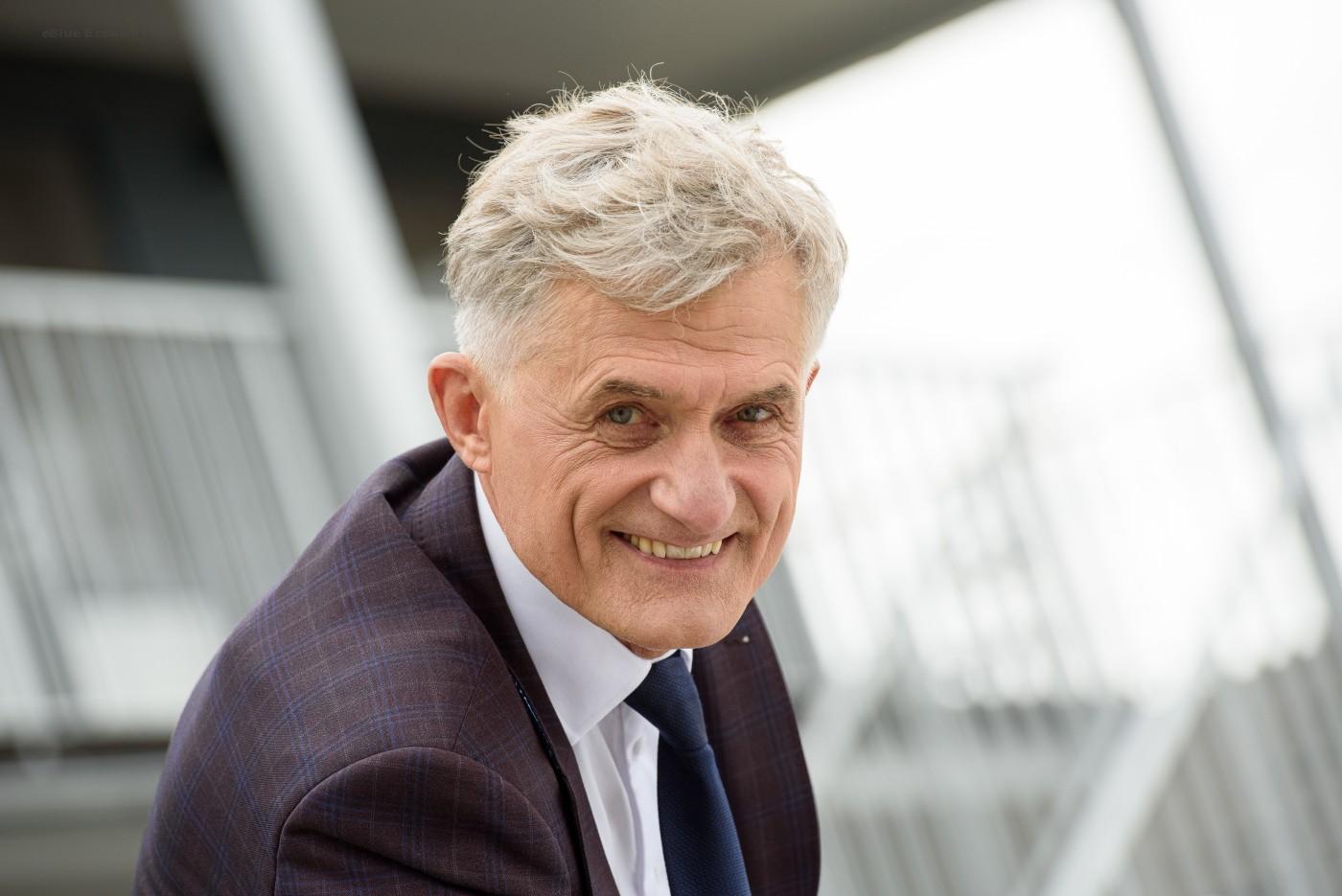
Mr Algis Latakas, the new CEO of the Port of Klaipeda, told us this month about his recent appointment as CEO, the impact of the COVID-19 crisis on the port, his view on the future potential of LNG, and the port’s efforts to become a “Green Port”. Read the whole interview below to discover the many other interesting topics he talked about!
Can you briefly tell us about the Port of Klaipeda? What are its main characteristics and challenges?
The Port of Klaipėda is the most important and largest transport hub in Lithuania, connecting sea, land and railway routes from the East to the West. It is a multipurpose, deep-water port, providing high quality services 24/7. The port can accommodate both Panamax and Post Panamax vessels.
14 large stevedoring companies, ship repair companies and ship building yards operate in the port and provide all types of marine business and cargo handling services. The turnover of cargoes of Klaipeda seaport reaches almost 50 million tons annually. The port of Klaipėda is the leader among the ports of the Baltic countries.
Our favourable geographical location is very important for our foreign partners. We have the shortest distance between the port and the most important industrial regions of the Eastern hinterland (Russia, Belarus, Ukraine, etc.) and the main shipping lines to major ports of Europe (Scandinavian countries and Germany). Intermodal shuttle trains connect the port with European, the Commonwealth of Independent States (CIS) and Asian markets.
The Port’s well-coordinated maritime and hinterland connections, the Free Economic Zone (FEZ), the EU short-sea shipping network, and the wide-range logistic and industrial operations, ensure reliable and rapid intermodal transportation.
In the forthcoming decade, large-scale port expansion projects are planned in Klaipėda Port. At present, marine environment preservation and harmonious co-existence of urban communities and maritime industry are among our top priorities.
In June 2020, you became the new CEO of the Port of Klaipeda. How did you get into maritime transport? How did your career path lead to this position?
I have been pro-actively involved in maritime business since 2000 when I graduated from the International Maritime Academy in Italy, majoring in hazardous cargo handling. Later, I continued my studies at the ISM University of Management and Economics and the Norwegian Business Institute and obtained a Master’s Degree in Management.
For nearly 2 decades I have been working in the largest stevedoring company in Klaipeda. I was responsible for establishing the new Fertilizer Terminal and putting it into operation. In addition I chaired the LNG Terminal WorkGroup. A few years ago, I started a maritime business consultancy company which enriched my managerial experience and network of business contacts. The company focuses on implementing new port development projects in the Ukraine and Poland.
Earlier this year, I was appointed as CEO of Klaipeda Port. I believe that the competent and dedicated team of the Port and the support of the port community will help me in these new professional horizons.

What is your vision for the Port of Klaipeda for the next decade?
Our vision for the forthcoming decade is a smart, environmentally friendly port, which complies with the requirements of customers. In the nearest future, we intend to dredge the port waters up to -17 m. In the long term, we are planning land reclamation in the Southern and the Northern parts of the port.
Implementing the port investment projects is fundamental to maintaining and increasing the port’s competitiveness.
A proactive and client–orientated approach of all port stakeholders will generate cargo volumes. Port development in Klaipeda is carried out in close cooperation with the port users who identify the needs and priorities. Our vision is to have a port which would be equally attractive to all maritime industry players and neighbouring communities: a port with innovations and values, cargo carriers, safe for navigation and as environmentally friendly as possible.
The COVID-19 crisis is having a profound impact on the European economy and society. What has been the impact of the COVID-19 crisis on the Port of Klaipeda? How has the Port prepared itself to guarantee that goods can continue to be handled in the port?
Sad to say, some sectors have been massively affected by the COVID-19 pandemic, with the impact on cruise shipping being the most considerable due to travel restrictions and decline in demand among cruise passengers.
My true conviction is that in times of crisis, infrastructural investment projects should not be delayed or ceased. Continuous investments guarantee smooth and efficient port business. I am glad to say that notwithstanding the COVID-19 pandemic, not a single investment project has ceased in Klaipeda port.