|
Getting your Trinity Audio player ready...
|
Long shielded in secrecy, the United States Navy’s vast underwater sonar network stands as a cornerstone of its maritime dominance—offering a critical advantage in detecting enemy submarines across much of the world’s oceans. But as tensions in the Indo-Pacific region simmer, particularly over Taiwan, this hidden infrastructure is emerging as both a strategic asset and a potential vulnerability.
The Submarine Detection Dilemma
The U.S. Navy’s ability to detect enemy submarines—thanks to an intricate matrix of seabed sensors, surface ships, drones, satellites, and surveillance aircraft—poses a significant obstacle to adversaries like China. A submarine that’s been located is a submarine that can be neutralized, making stealth an existential requirement for any undersea force.
This reality weighs heavily on Chinese military planners as Beijing considers the possibility of an amphibious assault across the Taiwan Strait. Quiet attack submarines are crucial to securing any beachhead, but only if they can evade detection. The United States’ near-global undersea monitoring network presents a major hurdle.
The Undersea Surveillance Legacy
The U.S. Navy began building its undersea surveillance system in 1950 under the ultra-secret “Project Jezebel,” laying thousands of miles of acoustic sensor-laced cables. The system, later known as the Integrated Undersea Surveillance System (IUSS), was partially declassified in 1991, revealing a sophisticated array of seabed sensors, surveillance ships, and sonar analysts stationed ashore.
Today, the system likely includes an even more advanced suite of tools: unmanned surface and underwater drones, ocean-monitoring satellites, and reconnaissance aircraft. While not all-encompassing, it’s arguably the most capable submarine detection system in the world—and a major concern for the People’s Liberation Army Navy (PLAN).
According to translated writings from Senior Captain Zhang Ning of China’s Naval University of Engineering, Chinese submarines are at high risk of being detected as soon as they leave port and while operating along the critical First Island Chain—from the Philippines to Japan. U.S. and allied anti-submarine units, alerted by this surveillance network, could effectively isolate Chinese submarines from deeper waters where they’re most effective.
A System Under Siege
However, the surveillance web is not invulnerable. Zhang and co-authors argue that individual “nodes” of the U.S. system can be identified and destroyed. These vulnerabilities, if exploited, could blind U.S. forces at a critical moment.
Retired Royal Navy Captain Chris O’Flaherty outlines a spectrum of potential Chinese tactics to sever U.S. undersea cables. These include overt operations using remotely operated vehicles (ROVs) from surface ships, as well as more covert missions involving autonomous submarines deploying explosives. The most concerning scenario involves planting timed or remotely triggered charges years in advance, enabling Beijing to disrupt the network at a moment of strategic choosing.
“Such explosives could be activated by coded acoustic signals—technologically easy to implement,” warns O’Flaherty.
A Gaping Maintenance Gap
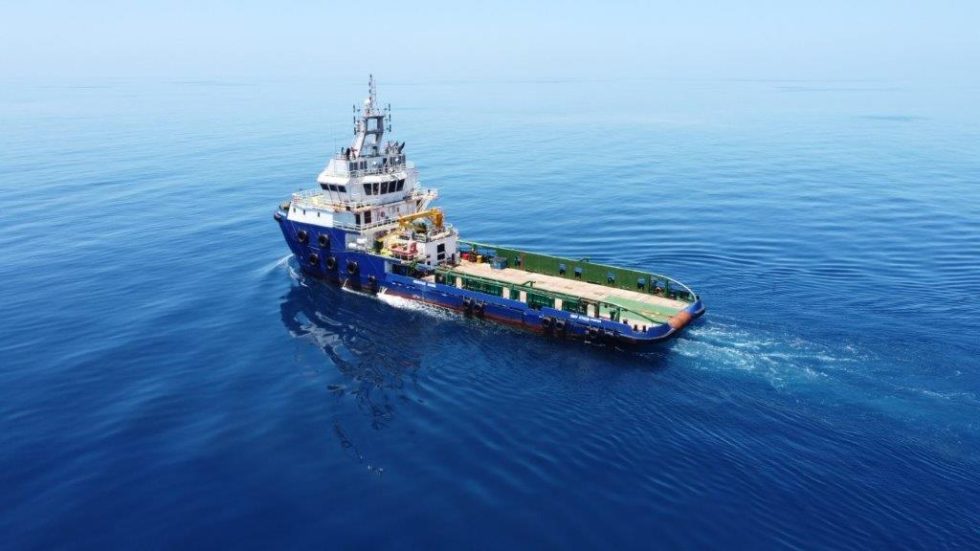
Repairing these damaged cables is a complex and delicate process, typically handled by a tiny cadre of highly trained crews aboard specialized vessels. Alarmingly, the U.S. Navy has only one such ship: the aging USNS Zeus, a 14,600-ton auxiliary launched in 1984. Although discussions for a replacement are ongoing, no new ship has been commissioned, and wartime construction is not feasible.
Moreover, Zeus would be a sitting duck in hostile waters. As O’Flaherty puts it: “Cable ships are easy targets.”
The Navy’s only other option is the USS Jimmy Carter, a 12,000-ton nuclear-powered submarine reportedly capable of special undersea missions, including potentially covert cable repairs. But even this unique platform could not cover the scope of potential sabotage across the vast Pacific.
The commercial sector offers no easy backup. The global fleet of cable repair vessels numbers fewer than ten—nowhere near enough for crisis scenarios. Industry leaders argue that at least 20 are required to meet current and future demand.
Strategic Blind Spot
Despite spending nearly $40 billion annually on shipbuilding—mostly on aircraft carriers, amphibious vessels, destroyers, and submarines—the U.S. Navy has invested little in bolstering this undersea infrastructure. If current trends continue, the United States risks losing one of its most decisive advantages in a potential conflict with China.
With geopolitical tensions escalating, especially in the Indo-Pacific, the Navy must urgently prioritize cable-repair capabilities and develop strategies to protect these vulnerable assets in wartime. In a future seabed battle, dominance may not lie with the biggest fleet, but with the side that can see—and stay hidden—the longest.