|
Getting your Trinity Audio player ready...
|
As the United Kingdom accelerates its journey toward net zero emissions, DNV has called for a renewed and more robust approach to risk management within the offshore renewables sector — one that draws from decades of safety experience in oil and gas.
In a newly released study titled “Offshore Renewables Risk Management – A Pragmatic Safety Case,” DNV compares major accident risks and safety management practices between the U.K.’s offshore oil and gas and offshore renewables industries. The report concludes that the U.K. must adopt a revised framework to better address major accident hazards as the renewables sector rapidly expands.
While the offshore renewables industry has not yet witnessed a catastrophic accident, DNV’s research reveals a growing trend in incident frequency and severity. This uptick, the organization warns, signals the need for a more proactive, structured safety approach. Lessons learned from historical oil and gas disasters such as Piper Alpha and Deepwater Horizon should, it says, be leveraged to prevent similar scenarios in the renewables domain.
“The offshore renewables sector is evolving quickly, but so too are the risks,” said Hari Vamadevan, Senior Vice President and Regional Director for the U.K. and Ireland, Energy Systems at DNV. “Accident and injury rates are rising as projects become larger and more complex. Unlike oil and gas, there’s currently no regulatory requirement for the identification and management of major accident risks in renewables — a gap that must be addressed.”
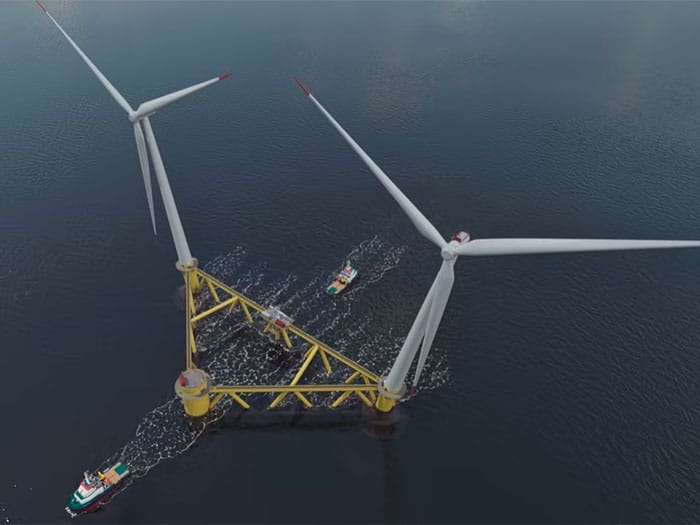
According to DNV’s Energy Transition Outlook Report, U.K. offshore wind capacity is expected to surge from 14 GW today to 90 GW by 2050 — including 10 GW of off-grid capacity dedicated to hydrogen production. Of this, nearly a quarter will come from floating offshore wind installations, further increasing the complexity of operations and the potential for large-scale hazards.
The study highlights a key regulatory contrast: while the offshore oil and gas sector operates under stringent safety case regulations developed in the aftermath of major accidents, offshore renewables projects are currently governed by broader frameworks such as the Construction (Design and Management) Regulations. These do not specifically target major accident hazards, leaving critical safety gaps.
DNV’s proposed “fit-for-purpose” safety case approach for offshore renewables introduces a comprehensive structure based on three pillars — hazard identification, risk assessment, and risk management. This model, the study suggests, will enhance transparency and accountability, enabling operators to communicate their risk strategies effectively to both employees and regulators.
Principal Engineer and lead author of the report, David Dimelow, noted that while the two industries differ in technology and operation, they share overlapping risk profiles. “Our proposal adapts proven oil and gas safety frameworks to the renewables context,” Dimelow explained. “A consistent risk management model will not only strengthen the U.K.’s offshore renewables safety culture but can also serve as a global standard for managing major accident risks in emerging energy sectors.”
With offshore renewables set to play a pivotal role in achieving the U.K.’s net zero ambitions, DNV’s study underscores the urgency of embedding mature, evidence-based safety principles into the sector’s regulatory and operational DNA.