|
Getting your Trinity Audio player ready...
|
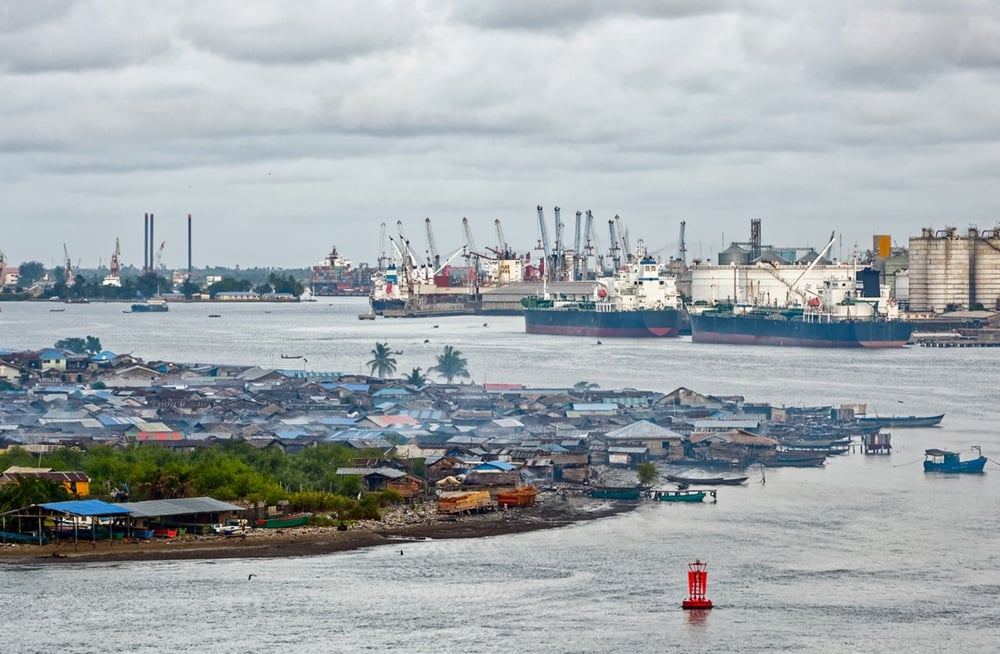
In one of the largest narcotics seizures in Nigeria’s history, the National Drug Law Enforcement Agency (NDLEA) has confiscated a massive one-tonne shipment of cocaine from a shipping container at Lagos’ Tin Can Island Port. The bust marks a milestone for Nigerian authorities and highlights the growing role of West African ports in global cocaine trafficking networks.
According to local reports, the drugs were uncovered during a disinfection operation involving empty containers imported into Nigeria for re-export use. The operation, led by customs officials and NDLEA agents, revealed what authorities later described as the first-ever “hard drug” seizure in the history of the specific customs unit at Tin Can Port.
“This is unprecedented for our terminal,” said Joe Anani, the customs area controller for the facility, in an interview with The Guardian Nigeria. “Never before have we encountered such a significant quantity of hard drugs within our jurisdiction.”
Authorities estimated the seized narcotics to have a street value of approximately $235 million, though international analysts suggest that at current European wholesale prices, the shipment’s value would likely be closer to $15 million. Regardless of the valuation differences, the bust underscores both the scale of the operation and Nigeria’s increasingly pivotal position in the global narcotics trade.
A New Trafficking Hub in West Africa
Lagos, West Africa’s busiest maritime gateway, has become a key node on the Brazil–West Africa–Europe cocaine corridor. Over the past decade, drug smuggling organizations—many of them linked to notorious Balkan criminal networks—have adapted their routes to exploit regional vulnerabilities in governance and law enforcement.
The Global Initiative Against Transnational Organized Crime recently identified West Africa as a rising hub for cocaine logistics, driven by what it called “four key factors: geography, gaps in governance, weak law enforcement collaboration, and ever-stronger transport infrastructure.”
These conditions have created a fertile environment for organized crime groups seeking to bypass heavily monitored European ports such as Rotterdam, Antwerp, and Hamburg. As security measures tighten in Northern Europe, traffickers have shifted their focus toward West African entry points, where oversight and detection capabilities remain comparatively limited.
The Balkan Connection
Investigations have increasingly pointed to the involvement of Balkan syndicates—comprising Bosnian, Serbian, Albanian, and Montenegrin actors—who are believed to be orchestrating complex transatlantic drug operations from their strongholds in South America. Using both small vessels and containerized trade routes, these groups reportedly transport cocaine from Brazil across the Atlantic to coastal nations such as Senegal, The Gambia, and Nigeria.
Once the shipments reach West Africa, traffickers conceal the cocaine within legitimate exports—such as agricultural goods, minerals, or industrial products—before sending the containers onward to European ports. The Gulf of Guinea, historically associated with oil and general cargo traffic, is now emerging as an unsuspected launch point for narcotics shipments bound for Europe’s northern shores.
“The latest seizure at Tin Can Port fits a pattern we’ve seen developing over the last few years,” said one international law enforcement analyst familiar with West African trafficking trends. “Criminal organizations are leveraging weaker maritime governance structures to move product with less risk. The result is that ports like Lagos are becoming both transit points and battlegrounds for anti-narcotics operations.”
Strengthening Nigeria’s Enforcement Efforts
The NDLEA has made notable strides in recent years under intensified federal oversight and international collaboration. Nigeria’s drug enforcement efforts have benefited from partnerships with the United Nations Office on Drugs and Crime (UNODC), the U.S. Drug Enforcement Administration (DEA), and Europol. Yet, as this latest case demonstrates, the sheer scale of maritime trade presents a formidable challenge.
Tin Can Port, one of Nigeria’s busiest cargo terminals, handles millions of tonnes of containerized freight annually. Inspecting every shipment remains impractical, and traffickers continue to exploit the gaps between customs protocols and private-sector logistics operations.
Nevertheless, the recent seizure sends a strong message that Nigerian authorities are stepping up surveillance and coordination to intercept illicit cargoes before they leave the port. The NDLEA has pledged to conduct a full investigation into the source of the container, its intended European destination, and any local collaborators involved in facilitating the shipment.
A Regional Warning
This incident serves as both a victory and a warning for Nigeria and its neighbors. While the successful operation highlights the growing capability of Nigerian enforcement agencies, it also underscores how deeply international criminal networks have entrenched themselves in the region’s maritime trade systems.
Experts warn that without broader regional cooperation—particularly among coastal states along the Gulf of Guinea—the challenge will persist. Smuggling groups are highly adaptable, shifting their routes and methods in response to enforcement successes.
“The battle against cocaine trafficking in West Africa is not just a Nigerian issue,” noted a report from the Global Initiative. “It is a regional and global problem that requires integrated intelligence, harmonized customs procedures, and sustained political will.”
As the investigation continues, the record-setting seizure at Lagos’ Tin Can Port stands as a significant milestone in Nigeria’s ongoing fight against international drug trafficking—a reminder that the nation’s ports are now firmly on the global map, both for commerce and for crime.