|
Getting your Trinity Audio player ready...
|
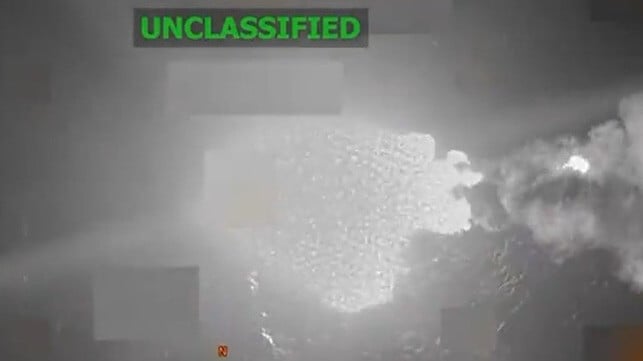
The U.S. military has carried out another high-profile strike in the Caribbean, targeting a suspected drug-trafficking vessel and eliminating three individuals believed to be involved in cocaine smuggling. According to the Pentagon, this marks the 15th such operation, bringing the total number of suspected narco-traffickers killed through direct military action to more than 60.
Defense Secretary Pete Hegseth confirmed the latest strike in an official statement, asserting that U.S. intelligence had identified the vessel as part of a known narcotics trafficking route. “This vessel—like every other—was known by our intelligence to be involved in illicit narcotics smuggling, was transiting along a known narco-trafficking route, and carrying narcotics,” Hegseth said. “Three male narco-terrorists were aboard the vessel during the strike, which was conducted in international waters. All three terrorists were killed, and no U.S. forces were harmed. The Department will treat them exactly how we treated Al-Qaeda. We will continue to track them, map them, hunt them, and kill them.”
The strike is part of a broader escalation of U.S. military activity in the region. The Trump administration has reportedly intensified its presence in the Caribbean amid growing speculation about potential ground operations in Venezuela. The USS Gerald R. Ford, currently stationed in the Mediterranean, has been ordered to reposition toward the Western Hemisphere, signaling a strategic redeployment. Once it departs, the Middle East will, for the first time in years, be without an American aircraft carrier presence.
The shift in U.S. Southern Command’s (SOUTHCOM) operations has also been accompanied by significant leadership changes. The II Marine Expeditionary Force has assumed control of the anti-narcotics campaign from the Coast Guard-led Joint Interagency Task Force South, which had previously relied on nonlethal enforcement measures.
Reports indicate that Adm. Alvin Holsey, commander of SOUTHCOM, was asked to retire early due to disagreements over the new aggressive tactics. Similarly, Lt. Gen. Joe McGee, Director of Strategy for the Joint Chiefs of Staff, was also reportedly dismissed following policy disputes related to the campaign, among other issues. The administration, however, has denied that the leadership changes are connected to the ongoing strike operations.
As Washington intensifies its militarized approach to combating narcotics trafficking in the Caribbean, analysts warn that the campaign represents a significant shift in U.S. counter-narcotics strategy—from interdiction and arrest to preemptive military elimination.