|
Getting your Trinity Audio player ready...
|
At the UN General Assembly on September 23, President Donald Trump declared that Ukraine could “win all of Ukraine back in its original form,” restoring its original borders. What seemed until recently like a remote and unrealistic scenario is now gaining traction — and the consequences may soon reach the global maritime industry.
For much of the past two years, senior U.S. officials had assumed that Ukraine’s only option was to sue for peace, even if that meant ceding large parts of its territory. The prevailing narrative, amplified by some international media, suggested that Russia’s military machine was inexorable, while Ukraine was steadily losing ground.
Yet the reality on the battlefield tells a different story. Ukraine has lost only marginal territory in 2025, and no significant town has fallen. Pokrovsk, Russia’s main objective this year, remains firmly under Ukrainian control. Moscow has incurred staggering manpower losses for minimal gains, while its relentless air and missile campaign has failed to break Ukraine’s will or inflict irreparable damage. At sea, Ukraine has effectively confined much of the Russian Black Sea Fleet to port, reopening trade routes through Pivdennyi, Odesa, Mykolaiv, and Chornomorsk. These conditions amount to a prolonged stalemate.
A Stalemate Shifts
Two factors, however, are reshaping the war. On the ground, the widespread use of small armed drones by both sides has created an impassable “dead zone” along the front line. Exhausted and short on manpower, neither side can mount large-scale offensives. The prospect of a decisive ground breakthrough has receded.
The real transformation lies in Ukraine’s growing success with long-range drone and missile strikes. These attacks are increasingly sophisticated, coordinated, and aimed at Russia’s most vulnerable assets.
On September 23, Ukraine launched a complex, multi-pronged assault on Novorossiysk, the main base of the Black Sea Fleet. Sea drones — possibly including the Toloka underwater drone carrying a one-ton warhead — breached harbor defenses. Aerial drones struck the Caspian Pipeline Consortium’s headquarters, which oversees a vital pipeline from Kazakhstan. Russia claimed to have shot down 25 drones, underscoring the scale of the operation.
The strikes rippled across the Krasnodar coast. The port of Gelendzhik was shut down, Tuapse harbor was hit, and evacuation orders were issued in Sochi, more than 120 miles away. For civilians, the illusion of Putin’s “special operation” progressing smoothly has been shattered. The unrest has even rekindled talk of Circassian separatism in the region.
Escalating Capabilities
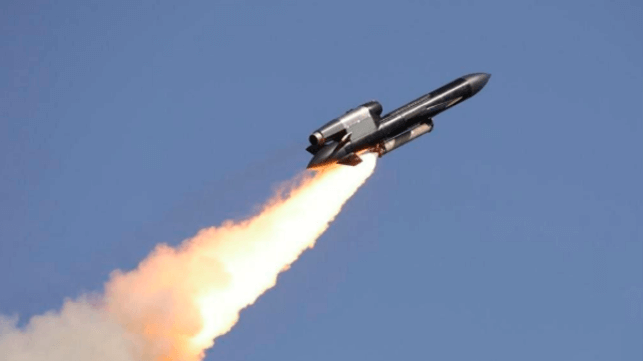
These attacks are set to intensify. Ukraine is scaling up production of its domestically designed FirePoint Flamingo cruise missile from one to seven per day by October, each at a cost of $1 million. A new plant in Denmark will begin producing solid fuel for the missiles by December. With a range of 1,750 miles and a one-ton warhead, the Flamingo can target Moscow, St. Petersburg, and Russia’s oil infrastructure across the West and Caspian basin.
Even at current levels, Ukraine’s strikes on oil facilities are beginning to cause shortages — something for which the Russian public, accustomed to a steady diet of state propaganda, is ill-prepared. Combined with mounting battlefield casualties, these shortages could fuel political unrest inside Russia.
Putin’s anxiety is evident in the spate of unattributable drone and fighter intrusions into NATO airspace over Poland, Estonia, Sweden, and Denmark — the latter singled out for its role in the Flamingo program. These micro-aggressions appear designed to sow division within NATO, though so far they have achieved the opposite. A measured response could even pave the way for a NATO-enforced no-fly zone over parts of Ukraine, imposed at long range without direct NATO incursions into Ukrainian skies.
Global Shipping in the Crosshairs
The broader consequences of Ukraine’s evolving strategy are harder to measure, but one outcome seems certain: severe disruption to Russia’s oil and gas export system. Strikes on ports, pipelines, and Russia’s so-called “dark fleet” of tankers will force global markets to adapt. Shipping capacity will have to be reallocated as countries turn away from Russian energy and seek supplies elsewhere.
What began as a land war in Eastern Europe is now expanding into an economic and maritime struggle with worldwide implications. If Ukraine’s strategy continues to escalate, global shipping lanes — and the stability of international energy markets — may be the next front line.