|
Getting your Trinity Audio player ready...
|
Two years ago, at a Coast Guard “healing event” following CNN’s Operation Fouled Anchor investigation, I asked Admiral Linda Fagan a simple question: When will the admirals be held accountable?
At the time, I believed only a few senior leaders were responsible for the decades-long failure to prosecute sexual assault and harassment cases at the U.S. Coast Guard Academy. Since then, I’ve discovered something far worse — that dozens of admirals and civilian officials knew about these crimes and did nothing for nearly fifty years.
The Operation Fouled Anchor (OFA) memorandum, dated July 9, 2019, discusses the repeated inaction of Academy superintendents between 1989 and 2006. Each superintendent was an admiral responsible for the daily operation of the Academy, and each reported directly to admirals in Washington, D.C. — the commandants, vice commandants, and Coast Guard Chief Counsels. Those leaders, in turn, reported to senior civilian officials at the Department of Transportation (DOT), and later, the Department of Homeland Security (DHS).
Yet, the 2019 OFA memo makes no mention of the D.C. admirals or of the civilian officials at DOT or DHS. Their absence from the report is troubling, especially since the record clearly shows that they were aware of what was happening. A careful review of newspaper archives, internal reports, and congressional testimony leaves no doubt that the problem — and the knowledge of it — reached the highest levels.
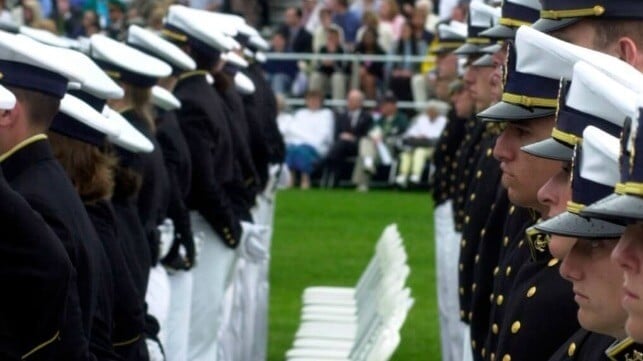
As early as May 21, 1980, Associated Press reporter Dan Hall quoted then-Commandant Admiral John B. Hayes acknowledging sexual harassment issues at the Academy during the graduation of the first women cadets: “We have not in the Coast Guard solved all of our sexual harassment problems,” he admitted. Another graduate confirmed the statement, saying, “We can’t deny that there were some instances.”
Admiral James Gracey, who led the service from 1982 to 1986, could not have missed the warnings either. In February 1984, UPI reporter Timothy Elledge covered testimony at a hearing in Alameda, California, where witnesses described rape and sexual harassment at the Academy. One article even reported that “a woman officer was raped while a student at the Coast Guard Academy and then got an abortion paid for by the government.” At the time, Coast Guard Public Affairs closely tracked media coverage, sharing it with top leadership — which included Admiral Gracey himself.
Both the Department of Transportation and, later, the Department of Homeland Security routinely monitored press coverage of the Coast Guard. I know this because I once served as a Coast Guard JAG officer and later as Chief Counsel for the Maritime Administration — a political appointee within DOT.
When Admiral Paul Yost succeeded Gracey (1986–1990), the problem persisted. The Defense Advisory Committee on Women in the Services (DACOWITS) recommended in 1988 that an upcoming study on women in the Coast Guard examine sexual harassment — a clear acknowledgment that the issue was known. Admiral Yost and DOT officials would have been briefed on the matter.
In 2023, attorney Peter Gleason wrote to the Senate Committee on Homeland Security and Governmental Affairs, describing a chilling account he heard while serving in the Coast Guard in the early 1980s. According to Gleason, a fellow service member said that pregnant female cadets were escorted to abortion clinics under Academy orders, effectively forced to choose between dismissal and termination of pregnancy. DHS public affairs would undoubtedly have circulated this report to then-Secretary Alejandro Mayorkas and Admiral Fagan.
Admiral J. William Kime, who served from 1990 to 1994, also faced scrutiny. On April 15, 1991, The Washington Post reported on a Coast Guard study prompted by DACOWITS’ earlier recommendation. The study found that “most male cadets and many men in the service did not want women in the Coast Guard in general and at the academy in particular.”
Officials admitted that they expelled one cadet and disciplined several others after uncovering a plot to videotape the seduction of a female classmate. Another case — the rape of a female cadet by a foreign exchange student in 1984 — ended only in deportation. Admiral Kime’s response to the Post was telling: he said he feared that “officials may be trying to fix a bad situation that doesn’t exist.”
By July 1993, Congress had lost patience. States News Service reported that “unacceptably high levels of sexual harassment, low morale, and serious management problems” at the Academy prompted lawmakers to cut its budget in half — a symbolic but significant reprimand.
These reports are only a fraction of the evidence I’ve compiled since first asking Admiral Fagan my question. My ongoing research now spans 510 pages and 627 references covering five decades of documented misconduct, indifference, and silence.
Within those pages are accounts of countless rapes and sexual assaults at the Coast Guard Academy — and only one known prosecution, in 2006. They also reveal a culture of fear, where cadets hesitated to report crimes, convinced that doing so would destroy their careers. Many asked why there were no examples of survivors who had gone on to successful service.
Sexual assault and rape are crimes — not disciplinary issues, not “misunderstandings,” but felonies under U.S. law. They have been crimes for more than fifty years. Yet, generation after generation of Coast Guard admirals in New London and Washington, D.C. turned a blind eye. So did the civilian leaders at the Departments of Transportation and Homeland Security who were responsible for oversight.
I am heartbroken that so many senior leaders — men and women alike — chose the reputation of the institution over the safety and dignity of its cadets. Three generations of Coast Guard officers, many of whom rose to the rank of admiral, knew what was happening and stayed silent.